Quick answer
Perth businesses fund vehicles, earthmoving plant, workshop machinery and mine-site equipment through chattel mortgages, leases and hire purchase, with the asset itself usually as security. Two WA specifics stand out: light vehicles above $50,000 attract 6.5% licence duty, while heavy vehicles pay 3% capped at $12,000, and lenders look closely at gear that will work on remote sites for a single large mining client.
Key points
- WA light vehicle duty slides from 2.75% to 6.5% between $25,000 and $50,000 of value, then stays at 6.5%
- Heavy vehicles over 4.5 tonnes pay 3% duty, capped at $12,000 once the value reaches $400,000
- Equipment destined for Pilbara or Goldfields sites is assessed on hours, operating conditions and the strength of the client contract
- Kewdale, Welshpool, Malaga and Henderson each have a distinct equipment profile, from prime movers to marine fabrication gear
- WA's Small Business Development Corporation offers free advice and dispute help if a supplier deal goes wrong
- Security
- The equipment, registered on the PPSR
- WA duty, light vehicle over $50k
- 6.5% of dutiable value
- WA duty, heavy vehicle
- 3%, capped at $12,000
- Local office
- None; handled by phone and online
Here’s a figure that surprises many Perth buyers. On a $70,000 dual-cab ute, Western Australian licence duty is about $4,550. On a $300,000 prime mover, it’s $9,000. In percentage terms the ute is charged more than twice the rate of the truck. That’s not a quirk of one deal; it’s how WA’s duty scale works, and it’s one of several local details worth knowing before you finance equipment in Perth.
This page covers equipment finance through a Western Australian lens: duty, the mining services economy, the industrial suburbs and the practical effect of the time difference. For the basics of how equipment finance works anywhere, see our equipment finance overview. We don’t have a Perth office; everything is handled by phone and online.
How does WA vehicle duty change the amount you borrow?
The WA Department of Finance sets licence duty on two scales.
Light vehicles (4.5 tonnes GVM or less)
| Dutiable value | Duty |
|---|---|
| Up to $25,000 | 2.75% |
| $25,000 to $50,000 | A sliding scale that climbs between 2.75% and 6.5%, applied to the whole value |
| Over $50,000 | 6.5% |
Heavy vehicles (over 4.5 tonnes): 3% of the dutiable value, capped at $12,000. The cap kicks in at $400,000.
So for most work utes and vans, which now sit well above $50,000, a Perth business pays 6.5% on the full value. Financing that duty is common, but it means repaying around $4,500 plus interest over the life of the loan. If cash allows, paying the duty upfront and financing the vehicle is usually cheaper in total. The equipment finance calculator shows the difference.
For trucks, the cap helps. Anything valued over $400,000 pays the same $12,000, which suits operators buying high-spec prime movers or road trains. Our page on truck finance covers structures for heavy vehicles.
What changes when the equipment heads to a mine site?
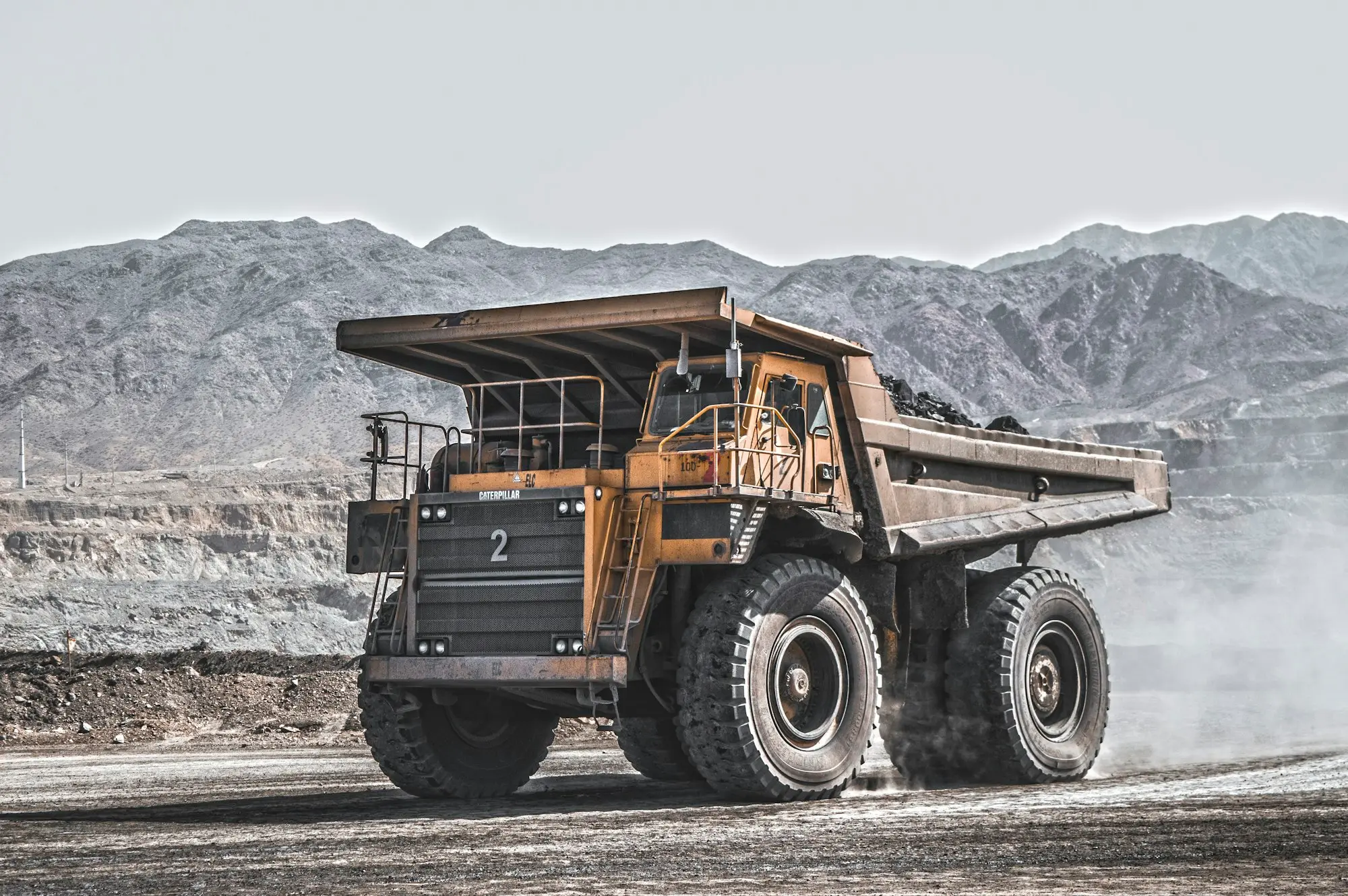
A large share of Perth’s equipment finance is for businesses that service the resources sector: contractors, maintenance crews, labour hire firms, drillers, haulage operators and engineering workshops. The gear is bought in Perth but spends its working life hundreds of kilometres north or east, on Pilbara, Goldfields or Mid West sites.
Lenders handle that every day, but they look at a few extra points:
- Operating conditions. Dust, heat and long shifts wear equipment faster. Lenders may shorten the term so the finance is paid down before the asset loses most of its value, and they often care more about engine hours than kilometres.
- The client. Working for a major miner is reassuring, but a business with one client is exposed if the contract ends. Expect questions about contract length and renewal.
- Site access and insurance. The insurer needs to cover the equipment where it will actually work, which can mean specialised cover.
- Balloon sizing. A big balloon on a machine that will be worn hard can leave a final payment bigger than the machine’s resale value. Our balloon payment glossary entry explains the trade-off.
The mining services industry page goes deeper into how lenders read resources-sector cash flow, including the long payment terms many tier-one clients set.
Equipment needed for a site start date? Let us know the details in a short enquiry. It’s a minute’s work and won’t show up on your credit file.
Where does Perth buy and use equipment?
Kewdale, Welshpool and Forrestfield. The freight and transport heart of the metro area, close to the airport and the rail terminals. Prime movers, trailers, forklifts and workshop hoists are the common purchases.
Malaga, Osborne Park and Wangara. Light industrial areas full of trades, fabricators and wholesalers. Vans, utes, CNC routers, cabinet-making machinery and stock-handling gear.
Henderson and the Australian Marine Complex. Shipbuilding, defence and offshore maintenance. Welding equipment, cranes, fabrication machinery and specialised marine tools.
Kwinana and Rockingham. Heavy industry, processing and port services, with demand for plant, generators and heavy vehicles.
Inner suburbs and the CBD. Hospitality fit-outs, medical and dental equipment, and IT for professional firms.
What should a Perth business have ready?
Lenders differ, but a well-prepared application usually includes:
- The supplier’s quote or tax invoice, or for private sales, the seller’s details and the serial number.
- Recent business bank statements, typically three to six months.
- For larger amounts, the last two years of financials and an ATO portal summary.
- Contracts or purchase orders that the equipment will service, especially for mine-site work.
- A PPSR search result for used equipment, so any existing finance can be paid out at settlement.
Will the time zone slow things down?
Many lenders’ credit teams are in Sydney or Melbourne. When eastern states are on daylight saving, Perth sits three hours behind, so a document sent at 3pm Perth time lands at 6pm in Sydney, after most assessors have finished for the day. Sending paperwork first thing in the morning keeps a deal moving the same day.
Start with your bank, then widen the field
WA’s banks fund a great deal of equipment, and when a business has solid financials and an established relationship, the bank is often the most competitive choice. It’s worth asking there first.
If the bank says no, or won’t fund used or mine-site equipment on terms that work, independent and manufacturer lenders fill the gap. In our directory, Cat Financial, Orix Australia and Azora Finance are among those funding commercial assets. For broader borrowing, see Perth business loans or our Western Australia overview. If a supplier dispute arises, the Small Business Development Corporation offers free advice and a dispute resolution service.
Have the machine picked out? Let’s look at the numbers
Whether it’s a light tower for a Pilbara shutdown or a new van for a Malaga workshop, the right finance structure keeps the repayments in step with the work.
Tell us about it in our enquiry form, which needs about sixty seconds. Making an enquiry leaves your credit file untouched. We don’t hand your enquiry around to a list of financiers; it stays with us. A member of our team considers the equipment, the site and the client behind it, then phones you. Please be accurate about the asset, the price and where it will work, because those details are what let us find the right lender on the first pass.
Frequently asked questions
How much is vehicle licence duty in WA?
For light vehicles of 4.5 tonnes or less, duty is 2.75% up to $25,000, a sliding rate between 2.75% and 6.5% from $25,000 to $50,000, and 6.5% above $50,000. Heavy vehicles pay 3% of the dutiable value, capped at $12,000. The WA Department of Finance publishes a calculator for exact figures.
Can I finance equipment that will be used on a remote mine site?
Yes, and many Perth businesses do. Lenders will ask where the equipment will operate, who the client is and how long the contract runs. They may also require insurance that covers the site and, for high-value plant, ask about maintenance arrangements.
Do lenders worry if most of my income comes from one mining company?
They notice it. A single large client isn't a deal-breaker, especially a well-known miner, but lenders want to see the contract term and what happens if it isn't renewed. Matching the finance term to the contract, or keeping a balloon modest, can help.
Can I finance used mining equipment?
Often, yes. Expect a valuation or inspection, questions about operating hours and service history, and a PPSR search on the serial number. Very old or heavily worked machines may need a larger deposit.
Does the time difference slow down equipment finance from Perth?
It can, because many lenders' credit teams work on eastern states time. Getting documents in early in the Perth morning, rather than late afternoon, keeps a deal moving the same day.