Quick answer
Adelaide businesses finance machinery, vehicles and production equipment through chattel mortgages, leases and hire purchase, with the equipment generally securing the loan. South Australia has its own wrinkles: commercial vehicles such as utes and vans attract lower stamp duty than other vehicles, wine businesses can often negotiate repayments around vintage, and defence suppliers near Osborne and Edinburgh need precision gear that lenders assess carefully.
Key points
- SA stamp duty on commercial vehicles tops out at $3 per $100, while non-commercial vehicles pay $4 per $100 above $3,000
- For new vehicles, SA duty is based on the manufacturer's list price including GST, and trade-ins can't be deducted
- Wine and horticulture businesses can often structure repayments around vintage and harvest income
- Specialised winery gear such as tanks, presses and bottling lines is harder to resell than tractors, so lenders may want a deposit
- Defence suppliers buying CNC and inspection equipment are assessed on contracts and accreditation as much as the machine
- Security
- The equipment, registered on the PPSR
- SA duty, commercial vehicle
- $30 plus $3 per $100 above $2,000
- SA duty, non-commercial vehicle
- $60 plus $4 per $100 above $3,000
- Local office
- None; handled by phone and online
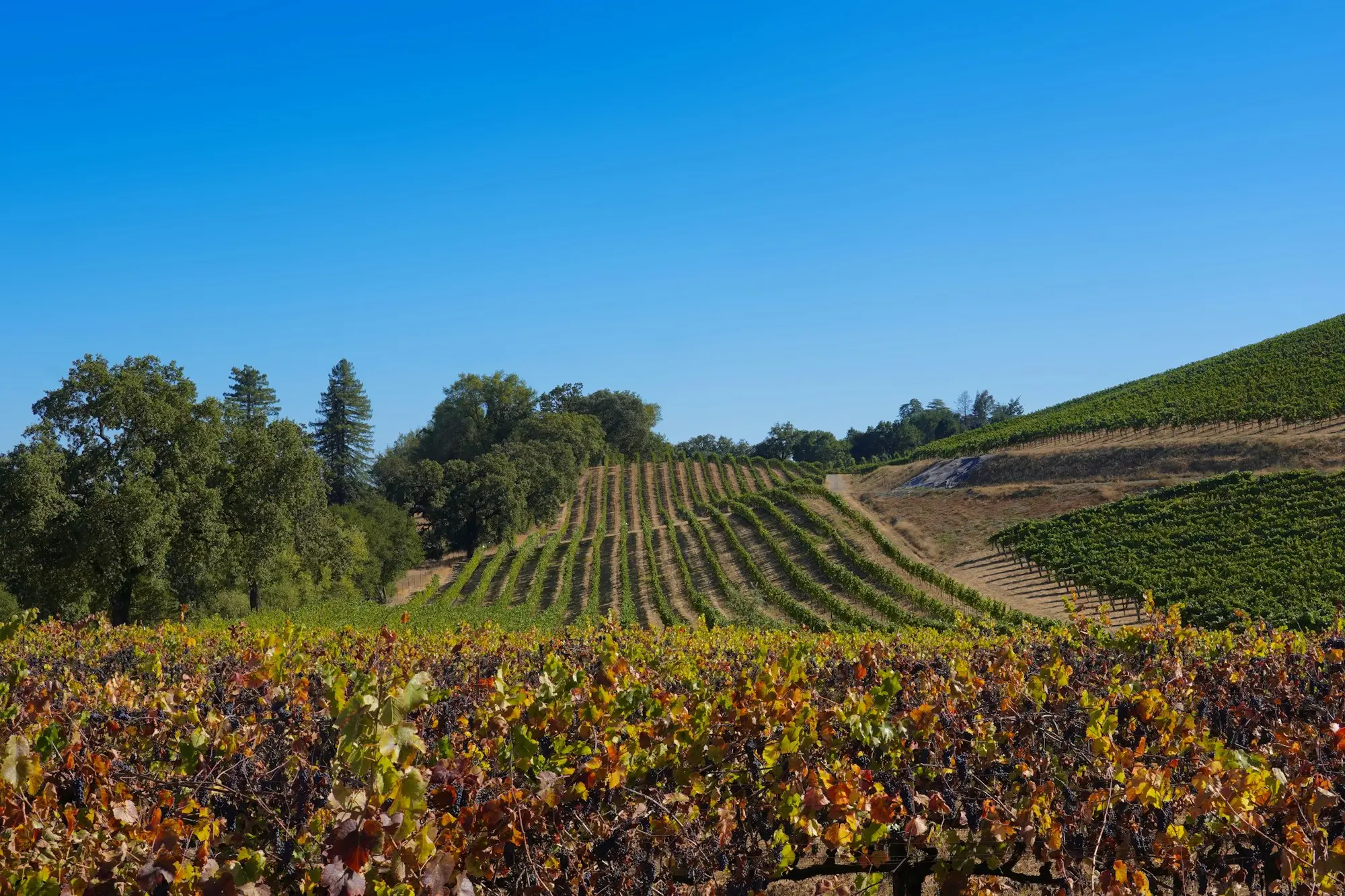
In much of Australia, equipment lenders think in calendar months. In and around Adelaide, many of their borrowers think in vintages. A winemaker in McLaren Vale earns most of the year’s income from wine made in a single few-week window, a grain grower north of the city is paid after harvest, and a defence supplier at Osborne may wait months between milestones on a long contract. Equipment finance works well for all three, but only when it’s shaped to the way money actually arrives.
This page looks at equipment finance for Adelaide and its surrounding regions. If you’re new to the product, our general equipment finance page explains structures and security. Below, we deal with what’s specific to South Australia: the state’s vehicle duty, seasonal repayments, defence work and the industries that buy the most gear. We have no Adelaide office; we work by phone and online.
Why does SA charge less duty on a ute?
RevenueSA splits vehicles into commercial and non-commercial, and it treats utes, panel vans, vans and heavy vehicles as commercial. The two scales are identical for cheap vehicles but diverge after $2,000:
| Dutiable value | Commercial | Non-commercial |
|---|---|---|
| Up to $1,000 | $1 per $100 (minimum $5) | $1 per $100 (minimum $5) |
| $1,000 to $2,000 | $10 plus $2 per $100 over $1,000 | $10 plus $2 per $100 over $1,000 |
| $2,000 to $3,000 | $30 plus $3 per $100 over $2,000 | $30 plus $3 per $100 over $2,000 |
| Over $3,000 | $30 plus $3 per $100 over $2,000 | $60 plus $4 per $100 over $3,000 |
On a $55,000 vehicle, that’s roughly $1,620 in duty for a ute against $2,140 for an SUV at the same price. For a business deciding between the two for a sales rep or site manager, the ute starts $520 ahead.
Two other RevenueSA rules affect the number you finance. For a new vehicle, the dutiable value is the manufacturer’s list price including GST (and luxury car tax where it applies), not the discounted deal price. And trade-in allowances can’t be subtracted. So a trade-in lowers what you borrow, but not the duty you pay. The equipment finance calculator helps you see the total either way, and our page on commercial vehicle finance covers the structures for fleets.
Wine and horticulture: can repayments follow the vintage?
Often, yes. Equipment lenders that work with primary producers regularly offer structured repayment schedules: larger instalments in the months when grape payments or wine sales come in, and smaller ones (sometimes nothing) in the lean months. Here’s a typical shape for a small winery in the Barossa or Clare:
| Period | Typical cash position | Common repayment structure |
|---|---|---|
| February to April (vintage) | Heavy spending on picking, fruit and labour | Reduced or deferred instalments |
| May to September | Wine maturing; sales steady but modest | Standard instalments |
| October to January | Cellar door and Christmas sales peak | Larger instalments to catch up |
Lenders will want two or three years of figures to see that pattern is real. The bigger question for wine businesses right now is resale value. With the sector working through oversupply and softer demand for some styles, lenders are more cautious about winery-specific equipment. A tractor or a forklift will always find a buyer; a set of stainless fermentation tanks or a bottling line has a smaller market. Expect a valuation, and possibly a deposit or additional security, for specialised gear.
Our winery business loans page and the guide to viticulture business loans cover the wider finance picture for the industry.
Buying before the next vintage? Send us a quick outline of the purchase. It’s a minute of your time and doesn’t involve a credit check.
Defence suppliers: what will a lender want to see?
Adelaide’s defence industry is anchored by the Osborne naval shipyards on the Lefevre Peninsula, where frigates are being built and a submarine construction yard is under development, and by the RAAF base and Edinburgh Parks in the northern suburbs. Hundreds of smaller firms supply those programs with machining, fabrication, electrical and inspection work.
For an equipment lender, a defence supplier presents a mixed picture. The contracts are long and the end customers are about as reliable as it gets. But payments can be lumpy, tied to milestones, and the equipment involved (five-axis CNC machines, coordinate measuring machines, specialist welding cells) can be expensive and specialised. Lenders typically ask for:
- the contract or purchase orders the machine will service, and their duration
- quality accreditations relevant to the work
- financials showing you can carry the repayments between milestone payments
- a supplier quote with full specifications, so they can judge resale value
Firms in Lonsdale, Tonsley and the northern industrial suburbs around Elizabeth and Edinburgh often combine equipment finance for the machine with invoice finance to smooth the gaps between milestone payments.
What else does Adelaide finance?
- Food and beverage processing across the northern and southern suburbs: packing lines, cool rooms, refrigerated trucks.
- Agricultural machinery from dealers on the city fringe heading to farms across the Mid North, Riverland and Limestone Coast.
- Construction and civil: excavators, tippers and cranes for road, housing and port projects.
- Health and professional services in the city and inner suburbs: imaging, dental chairs, IT.
Banks first, then the asset specialists
South Australian banks and the majors all finance equipment, and if you have solid financials and a good relationship, a bank offer is often the cheapest. It deserves a proper look.
Where SA businesses most often fall outside bank appetite is specialised winery gear, used machinery, recent losses after a tough vintage, or a single dominant defence client. Independent lenders such as Flexicommercial, Westlawn Finance and Group and General Finance appear in our directory as equipment and asset financiers. For broader options, see Adelaide business loans and South Australia business loans, and if a supplier dispute arises, the state’s Small Business Commissioner can help.
Whether it’s a press, a lathe or a ute, start here
A good equipment purchase earns its keep long before it’s paid off, especially when the repayments line up with the seasons or the contract that funds them. If you’re weighing a purchase, we’d like to hear about it.
Our form takes roughly sixty seconds, and completing it doesn’t put an enquiry on your credit report. Your enquiry isn’t copied out to a long list of funders; it stays with one team from start to finish. One of our people looks at the equipment, your income pattern and your timeline, and then calls to work through it. Precise answers about the asset, its price and the months your revenue lands matter, since that’s how we match you to a suitable financier on the first try.
Frequently asked questions
What counts as a commercial vehicle for SA stamp duty?
RevenueSA treats utes, panel vans, vans and heavy vehicles as commercial. Everything else, including most SUVs and sedans, is non-commercial and pays a higher rate above $3,000. If you're unsure how a particular vehicle will be classed, check with RevenueSA before you budget.
Can a winery get equipment finance with seasonal repayments?
Many equipment lenders offer structured or seasonal repayment schedules for wine, grape-growing and farming businesses, with larger payments when income arrives and smaller ones in between. Lenders will want to see a few years of trading so they can match the schedule to your actual cash flow.
Is it hard to finance used winery equipment?
It can be. Tanks, presses and bottling lines have a smaller pool of buyers than tractors or forklifts, and with the wine sector under pressure, lenders are careful about resale value. Expect a valuation, and possibly a deposit or extra security for older or highly specialised gear.
Can a small defence supplier in Adelaide finance new machinery?
Yes. Lenders will look at your contracts or purchase orders with primes, your accreditation and your trading history, as well as the machine. Standard CNC and inspection equipment is easier to fund than custom-built tooling.
Where can an Adelaide business get help with a supplier dispute?
The South Australian Small Business Commissioner helps small businesses with disputes and provides information on rights and obligations. It's a useful step before legal action if an equipment supplier fails to deliver.