Quick answer
South Australian businesses can borrow from banks, non-bank lenders, fintechs and private lenders, with or without property security. Local details matter: SA payroll tax starts above $1.5m in wages, one of the highest state thresholds; Land Services SA has held every title electronically since paper duplicates ended in July 2016; and the Small Business Commission offers dispute help, mediation and farm debt mediation.
Key points
- SA is where Torrens title began, and since 4 July 2016 no paper duplicate titles have been issued, so property security lodges electronically
- Payroll tax applies only once Australian wages pass $1.5m, which leaves growing SA employers more headroom than most states
- Wine businesses carry stock for years before it sells, so lenders look at inventory and seasonality, not just profit
- The SA Small Business Commission handles payment and lease disputes, retail bonds and farm debt mediation
- Land registry
- Land Services SA, for the Registrar-General
- Payroll tax threshold
- $1.5m annual Australian wages
- Dispute help
- Small Business Commission (SA)
- Enquiry range
- $5k to $5m, business purposes only
Every property-secured business loan in Australia owes something to South Australia. The Torrens title system, where the government register itself is proof of ownership, began here under the Real Property Act in the 1850s and spread to every other state. More than 160 years later, SA still tends to move early on land titles: it stopped issuing paper duplicate certificates of title on 4 July 2016, years before most of the country.
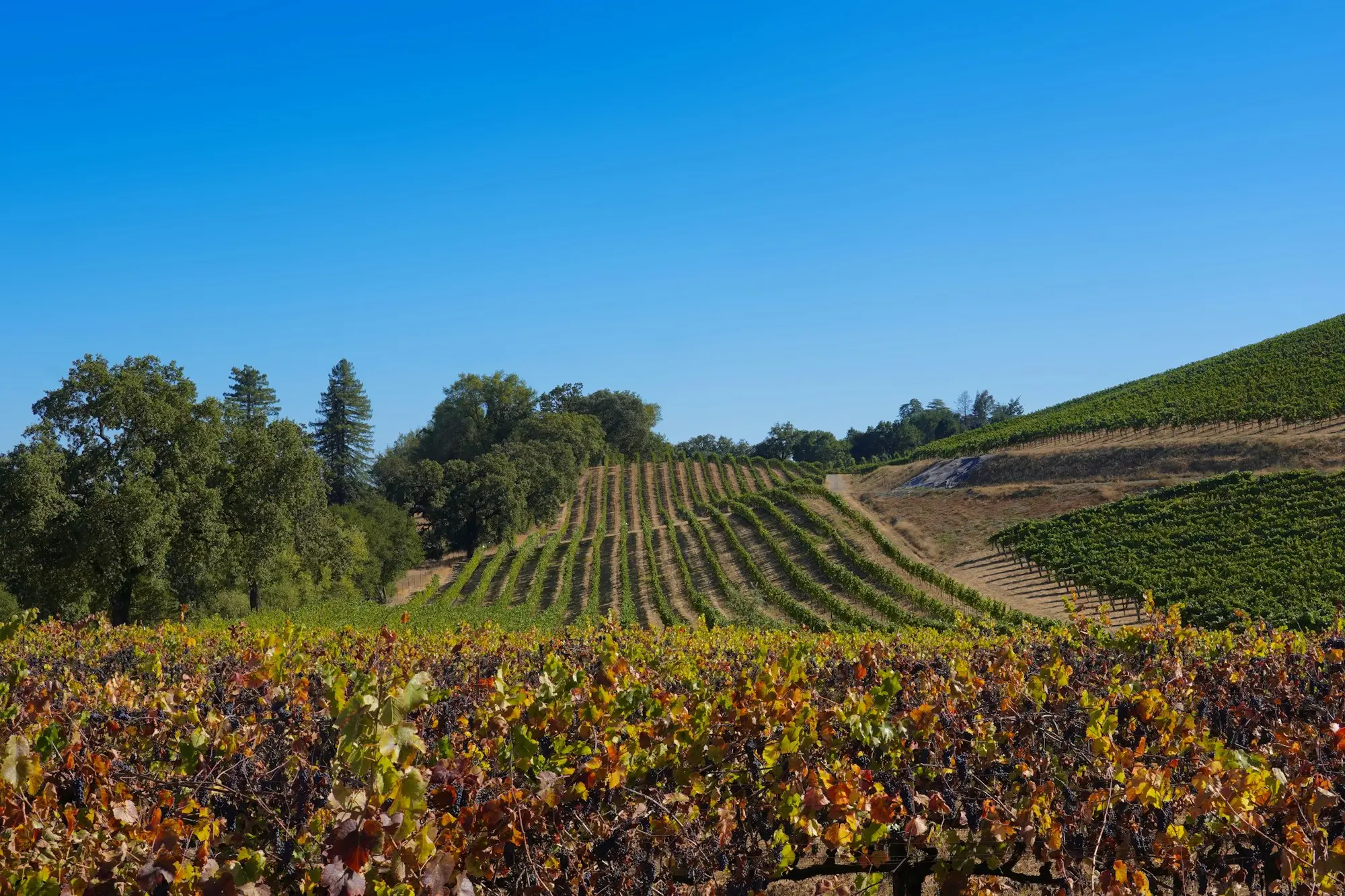
That’s a fitting place to start, because a lot of SA business borrowing ends up resting on land, whether it’s a vineyard in the Clare Valley, a workshop at Wingfield or a family home in the eastern suburbs. This page covers what’s distinctive about borrowing in South Australia: the titles system, state payroll tax, the industries that drive demand for credit, and the free and low-cost help the state offers when a dispute is the real issue.
A quick note before we begin: this directory has no South Australian office. Like most business lending now, an SA loan can be applied for, approved and settled without anyone visiting a branch.
How does property security work in South Australia?
Land Services SA operates the state’s land titles registry under a long-term arrangement with the government, with the Registrar-General keeping oversight. Every certificate of title is held electronically, and paper duplicates are no longer used as informal security. That has two practical effects for borrowers.
First, there’s nothing to hunt for. If your old paper title was lost years ago, it doesn’t matter; the electronic register is the record. Second, mortgages and caveats are usually lodged through an electronic lodgement network operator, so the security step itself is quick. The slow parts of a property-secured deal in SA are the same as anywhere: valuation, title checks and getting everyone’s signatures.
On caveats specifically, SA has a removal process that owners sometimes call “warning” a caveat. The owner applies to Land Services SA, the caveator is notified at its address for service, and the caveator then generally has 21 days to get a court order extending the caveat and serve it on the Registrar-General. If nothing happens, the caveat is removed. That’s why a reputable caveat loan is documented carefully, with your written consent and a loan agreement giving the lender a genuine interest in the land.
If you’re deciding between a caveat and a registered mortgage behind your existing home loan, the caveat loan vs second mortgage comparison walks through cost, speed and risk side by side. For a plain-English explainer of the register itself, see our Torrens title glossary entry.
What does SA payroll tax mean for a growing business?
RevenueSA applies payroll tax once your total Australian wages exceed $1.5m a year, roughly $125,000 a month. Among the six states, that’s the highest starting point, which gives SA employers useful room to grow before the tax kicks in. A sliding rate applies to payrolls just over the line, and the full 4.95% rate applies once wages are comfortably above it.
For lending, the effect cuts two ways:
- Headroom. A South Australian business with $1.4m in wages pays no payroll tax at all. The same business in Victoria or WA would already be paying, so its cash flow, and its capacity to service a loan, looks a little stronger here.
- The step up. When you do cross the line, monthly returns start and the cost becomes a fixed outgoing. Lenders will check that you’re registered and up to date, much as they check BAS and super.
If a payroll tax, BAS or super bill is the reason you’re looking for money, read our page on paying a tax bill before you commit to anything. It compares a payment plan with borrowing, in dollars.
Which SA industries borrow, and for what?
South Australia’s economy is more varied than its size suggests. Here’s where the demand for business credit tends to come from.
| Sector | Where | What owners usually fund |
|---|---|---|
| Wine and grapes | Barossa, McLaren Vale, Clare, Coonawarra, Adelaide Hills, Riverland | Vintage costs, barrels and tanks, stock held for years, cellar doors |
| Defence and shipbuilding | Osborne, Edinburgh, Lonsdale | Precision machinery, accreditation costs, hiring ahead of contracts |
| Advanced manufacturing | Wingfield, Gepps Cross, Elizabeth, Lonsdale | Equipment, factory fit-outs, raw materials for large orders |
| Mining and steel | Upper Spencer Gulf, Far North | Contractor plant, vehicles, working capital on long payment terms |
| Grain, livestock and horticulture | Eyre Peninsula, Mid North, Riverland, South East | Harvest working capital, machinery, rural property |
| Health, education and services | Adelaide CBD and suburbs | Practice purchases, fit-outs, technology |
Two of those deserve a closer look.
Defence. The long build-up of naval shipbuilding at Osborne, including the planned nuclear-powered submarine program, has pulled a wave of engineering and fabrication suppliers into the defence supply chain. These businesses often need to buy precision equipment and win certifications well before the first purchase order lands. Equipment finance and contract-backed working capital are the usual tools, and lenders will want to see the contract or tender documents.
The Upper Spencer Gulf. Since the Whyalla steelworks went into administration in February 2025, many local suppliers have dealt with unpaid invoices and uncertain orders. The state government set up a creditor assistance scheme and support grants, and those are worth pursuing first. For businesses that still have a gap, lenders will want to understand how much of your income depends on the steelworks and what your plan is if volumes stay low.
Want a quick feel for what you could borrow before speaking to anyone? The business borrowing power calculator gives a ballpark figure quickly, or you can put your SA details to us directly: a one-minute form that sits outside your credit report entirely.
How do lenders look at a South Australian wine business?
Wine is where SA lending gets most specialised, so it’s worth explaining. A winery spends heavily at vintage, roughly February to April, on picking, crushing, fruit purchases and labour. The wine it makes may then sit in barrel and bottle for one to three years, or longer for premium reds, before it’s sold. Profit on paper can look healthy while the bank account is empty.
Lenders that understand the industry focus on:
- Stock on hand and its realistic sale value, not just its cost
- Sales channels: cellar door, domestic distribution, export, bulk
- Land and vineyard security, which is usually the anchor for the loan
- Season-to-season swings in yield and fruit prices
A rigid weekly repayment loan rarely suits this cash cycle. Flexible structures that match repayments to the sales calendar tend to work far better. Our pages on winery business loans and seasonal businesses go deeper.
An example from the Barossa
An invented business, used to show the thinking.
A family winery near Tanunda crushes about 400 tonnes a year and sells through a cellar door, an interstate distributor and a little export. After a strong vintage it needs $350k to buy extra fruit from neighbouring growers and pay seasonal staff, with the wine not saleable until the following year. Its bank is supportive but wants the request to go through its annual review, which is months away.
A workable structure might be a 12 to 18-month loan secured by a second mortgage over the winery land, with interest-only repayments until the vintage’s first releases, then principal reductions from sales. The owners compare the full dollar cost of that option against waiting for the bank using the loan cost comparison calculator, so they can decide whether the extra fruit is worth the price of speed.
Where does the SA Small Business Commission fit in?
The Small Business Commission in South Australia doesn’t lend, but it’s one of the more practical state bodies of its kind. It gives advice on business disputes, arranges independent mediation, provides guidance on commercial and retail leases, and handles retail bond lodgement and refunds. It also runs farm debt mediation, which brings a farmer and a creditor together with an independent mediator before enforcement on farm debt.
For owners under pressure, that matters. If a customer owes you a large sum, if a landlord dispute is eating your cash, or if a farm lender is moving towards enforcement, the Commission can be a cheaper first step than a loan. Where finance is still needed, a resolved dispute or a mediated plan gives a lender far more confidence.
Is your bank still the best first call?
Usually, yes. Banks, including the majors and SA’s local and mutual banks, are often the cheapest source of business credit when your business fits their criteria, especially with solid property security and clean accounts. If your bank makes a sensible offer, take it seriously.
But plenty of good South Australian businesses fall outside the boxes: a winery with a run of short vintages, a defence supplier waiting on a contract, a new ABN, a recent tax debt, or a deadline that won’t wait for a credit committee. That’s when non-bank business loans and private lenders earn their place. If a bank has turned you away, this guide to bank declines explains the realistic paths forward without judgement.
Let’s find what fits your SA business
From the Riverland to the Fleurieu, the right loan comes down to your security, your cash cycle and the honest reason you need the money. Getting that match right is what we do every day.
Start with our short form; most South Australian owners finish it in about a minute. Submitting it doesn’t lodge any credit enquiry, so nothing new appears on your report. We keep your enquiry in-house instead of circulating it among funders, and a specialist who has read your answers calls you personally. Careful, truthful figures on the amount, the purpose, your security and how long you’ve traded mean our first suggestion is much more likely to land.
Frequently asked questions
Who runs the land titles office in South Australia?
Land Services SA operates the land titles registry on behalf of the state, with the Registrar-General overseeing it. All certificates of title are held electronically, and paper duplicates haven't been issued since 4 July 2016, so mortgages and caveats are normally lodged through an electronic lodgement network.
How long does a caveat last in South Australia if the owner wants it removed?
An owner can apply to Land Services SA to remove a caveat. The caveator is then notified and generally has 21 days to obtain and serve a court order extending it, or the caveat comes off the title. A loan caveat lodged with your consent and backed by a proper loan agreement is set up so this doesn't become an issue.
What is the payroll tax threshold in South Australia?
Payroll tax applies once your annual Australian wages exceed $1.5m. A lower sliding rate applies just above the threshold, and the full rate of 4.95% applies on larger payrolls. RevenueSA Online calculates the exact amount for your business.
Can a winery get a loan against its stock?
Some lenders will finance wine inventory, particularly bulk and bottled wine with a sales history, but most South Australian wineries borrow against land, vineyards or the owners' homes. Stock is often used as supporting security alongside property rather than on its own.
What does the SA Small Business Commission do for farmers?
Alongside general payment and lease disputes, it runs farm debt mediation, which brings a farmer and a creditor together with an independent mediator before enforcement action on farm debt. It doesn't lend money, but mediation can buy time and open options.