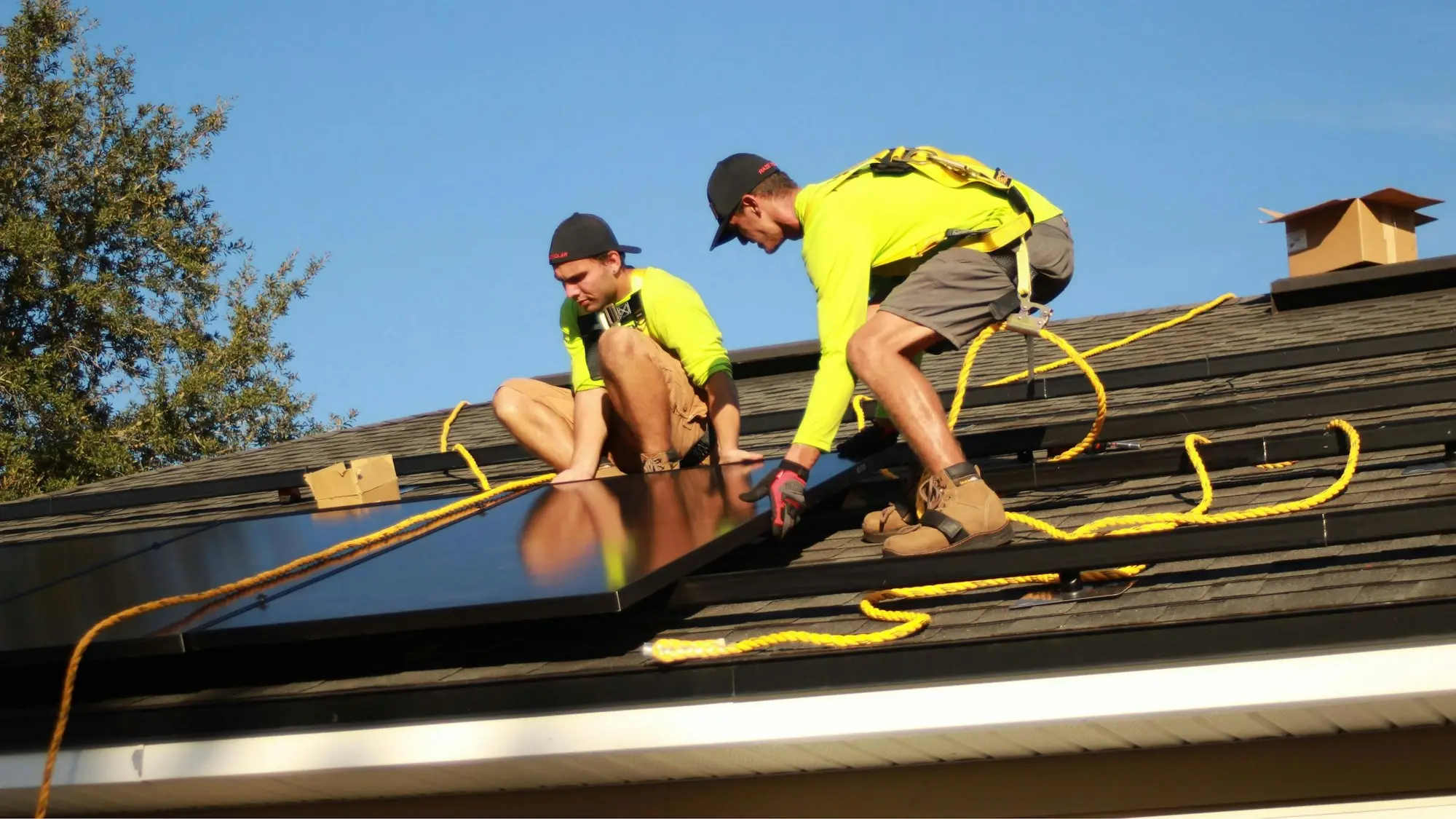
Quick answer
Roofers usually borrow to carry the cost of sheeting, tiles, edge protection and labour before a builder, homeowner or insurer pays, and to buy trucks, roll-formers, hoists and safety equipment. Storm seasons can multiply work overnight, so a revolving line of credit is often the most useful facility. Equipment finance suits vehicles and plant. Banks suit established roofers; non-bank lenders move faster after a weather event.
Key points
- A full re-roof ties up thousands in materials, scaffold or edge protection and wages before any money comes in
- After hail and storms, insurance repair work can arrive in a flood, but insurers and their builders may take weeks to pay
- Removing more than 10 square metres of non-friable asbestos needs a Class B licence, which many roofers add to win re-roof work
- Lenders read weather-driven income as lumpy, so explain your storm and insurance history up front
Most trades get busier gradually. Roofing can change in an afternoon. A hailstorm rolls across a few suburbs, and by the next morning the phone hasn’t stopped: tarping, emergency repairs, assessments, then weeks of full re-roofs. It’s good for business, but every one of those jobs needs materials, labour and safety equipment paid for well before the money arrives.
That timing gap, more than anything else, is why roofers come to lenders.
What does a re-roof tie up before you get paid?
Take a typical residential metal re-roof on an older single-storey home. Before the final invoice is even raised, the business has usually paid for:
| Cost | When it’s paid |
|---|---|
| Colorbond-style sheeting, flashings, insulation blanket and fixings | On order or on 30-day account |
| Edge protection or scaffold hire | Weekly, from the day it goes up |
| Skip bins and tip fees for old roofing | During the job |
| Wages for the crew, often two to four people | Weekly or fortnightly |
| Asbestos removal and disposal (older homes) | Before new sheeting goes on |
| Fuel, crane or hoist hire | As used |
On a homeowner job, a deposit covers some of that. On builder or insurance work, the roofer often carries most of it until the claim is approved. Multiply by six or eight jobs running at once after a storm, and the amount tied up can easily outgrow an overdraft that was set for normal trading.
How do lenders see roofing businesses?
Roofing is a licensed, physically demanding trade with steady underlying demand: new homes, ageing roofs, solar installs that need roof repairs first, and regular weather damage. Lenders see that.
What they probe:
- Lumpy income. Storm years and quiet years look very different in bank statements. Explain the pattern rather than letting a lender guess.
- Who pays you. Private homeowners, builders, strata managers and insurers all pay on different timetables. Insurance repair work in particular can be concentrated among a handful of insurers or their appointed builders.
- Safety record and insurance. Roof work is done at height, which insurers price accordingly, and lenders funding trucks and plant often ask for evidence of public liability cover.
- Tax position. Roofing businesses that grew quickly after a storm sometimes fall behind on BAS. Lenders can work with an ATO payment plan, but they need to see it.
Which kind of finance suits which roofing need?
For a storm surge or slow insurers: invoice finance advances most of an invoice’s value once the job is done and billed, then settles when the insurer or builder pays. A revolving line of credit works similarly but isn’t tied to specific invoices. Our invoice finance calculator shows how the advance and fees play out.
For trucks, cranes and hoists: commercial vehicle finance or a chattel mortgage, usually with the body, crane or hoist included. Roofing trucks with loader cranes hold their value reasonably well.
For roll-forming machines and workshop plant: equipment finance, which lets larger roofing businesses make their own gutters, fascia and custom flashings rather than buying them in.
For growth or a business purchase: unsecured or property-secured loans, depending on the size. Buying out a retiring roofer’s business, with their trucks and customer base, is a common example.
Got a storm backlog and a supplier account near its limit? Let us know the numbers. It’s a sixty-second form, and no one looks up your credit history when you send it.
Why do roofers add an asbestos removal licence?
Many older Australian homes have asbestos cement roof sheeting or eaves. SafeWork NSW explains that a Class B asbestos removal licence is needed to remove more than 10 square metres of non-friable asbestos or asbestos-containing material, and that Class B holders can’t remove friable asbestos. Other states apply the same broad national framework through their own regulators.
A typical asbestos cement roof is well over 10 square metres. A roofer without the licence has to bring in a licensed removalist and wait for them, or lose the job. Getting licensed means training, approved procedures, protective equipment, decontamination gear and disposal costs, but it lets the business quote whole re-roofs on older homes.
For a lender, that’s a broader income base. It also comes with more insurance and compliance questions, so have the paperwork ready.
What about licensing in your state?
- Queensland: the QBCC roof tiling licence covers cutting and fixing tiles, battens, flashings, sarking, safety mesh and skylights, among other work, but not roof painting. Most building work above $3,300 requires a QBCC licence.
- New South Wales: roof tiling, roof slating and roof plumbing are each listed categories of building and trade work managed by Building Commission NSW.
- Victoria: roof plumbing is regulated as plumbing work through the Building and Plumbing Commission.
How should you plan for storm season?
- Arrange funding while the sky is clear. Revolving credit approved during an ordinary month sits ready for the day hail arrives.
- Agree terms with your supplier. Know your account limit and whether it can stretch during a surge.
- Check your insurer panel agreements. Know how long payment takes after a job is signed off. Our glossary entry on debtor days shows how to measure it.
- Don’t overcommit. Taking on more jobs than your crew can finish means more money tied up for longer.
- Keep records tidy. Photos, completion certificates and signed variations speed up insurer payments.
If a disaster has hit your own business, our page on business loans after natural disasters covers the options.
Example: a western Sydney roofer after a hailstorm
An imagined scenario showing how this works in practice. A Penrith roofing outfit with four on the tools usually juggles two or three re-roofs at a time for homeowners and two local builders. A spring hailstorm brings 14 insurance jobs through a repair builder in three weeks. Each needs sheeting, edge protection and an extra labourer, and the repair builder pays 30 days after each job is signed off.
The owner’s bank overdraft is $30k, well short of what’s needed. Instead, a non-bank funder offers a debtor facility secured over the repair builder’s invoices, advancing most of each invoice’s value once the job is completed. The business takes on two more casual roofers, clears the backlog in eight weeks, and reduces the facility as payments catch up.
Getting your roofing business funded
Few trades juggle weather, ladders and late payers quite like roofing does. The right finance takes one of those worries off the list.
Sending an enquiry is a one-minute job, and making it leaves no footprint on your credit record. It goes to one team and no further, which keeps the calls down to one. That call comes from a real specialist who has looked at your particular business. Tell us accurately what you turn over, how your work splits between insurance, builder and private customers, and the sum required; precise answers are what make our first recommendation a good one.
Frequently asked questions
How can a roofer fund a surge in storm repair work?
A line of credit or invoice finance is usually the best match. Both let you draw money as jobs are completed and repay as insurers or builders pay. Apply before the storm season if you can, since lenders are more comfortable approving a facility when trading is steady.
Can I finance a truck with a crane or hoist for roofing?
Yes. Trucks fitted with cranes, material hoists or tilt trays are usually financed through equipment finance or a chattel mortgage, with the vehicle as security. Include the body and crane fit-out in the same contract where the lender allows it.
Does an asbestos removal licence help my business borrow?
Indirectly. A Class B licence lets you remove larger areas of non-friable asbestos sheeting yourself, which can win complete re-roof jobs on older homes. A lender may like the broader income base, but will also expect to see appropriate insurance.
Do lenders treat insurance work differently from private jobs?
They often do. Insurance work usually comes from a small number of insurers or repair builders, so it can be concentrated, and payment timing depends on their approval processes. Lenders will want to know how much of your income comes from insurance work and how quickly it's paid.
Will my bank lend to a roofing business?
Banks lend to roofers with solid financials, a track record of profit and good security, and they are often the cheapest option. If your bank needs months of paperwork when a storm has just landed, non-bank lenders can usually assess you on recent statements and existing jobs.